
The Psychology of Ritual: Creating Meaningful Moments for Mental Wellness
More Than Candles and Crystals
When you hear the word ritual, you might picture candles, crystals, herbs, or something a little witchy. But rituals are far more universal than that. Across cultures and throughout history, people have created rituals to mark transitions, celebrate milestones, connect with others, and build a sense of meaning in everyday life.
From a mental wellness perspective, rituals offer something many of us need more of: intentional pauses.
The difference between a ritual and a routine isn't really about what you do — it's about how you do it. A routine is something we often move through automatically, barely noticing it happen. A ritual asks us to slow down and bring awareness and meaning to that same action. The practice itself doesn't have to be complicated. What matters is the intention behind it.
Rituals Can Help You Feel Grounded
When life feels unpredictable or overwhelming, a familiar ritual can offer a real sense of structure. Repeating a small practice — making tea before bed, journaling in the morning, taking a few deep breaths before starting the day — creates a predictable moment to pause.
That predictability matters more than it might seem. Research on rituals, including a well-known study out of Harvard Business School, has found that structured, repeated practices can meaningfully ease anxiety and support people through loss (Harvard Business School, The Power of Rituals in Life, Death, and Business) — not because the ritual itself solves anything, but because it gives the nervous system something steady to hold onto.
These small, repeatable moments can become a cue to shift out of the constant "go, go, go" of everyday life and check in with yourself.
Rituals Can Help You Connect With Your Emotions
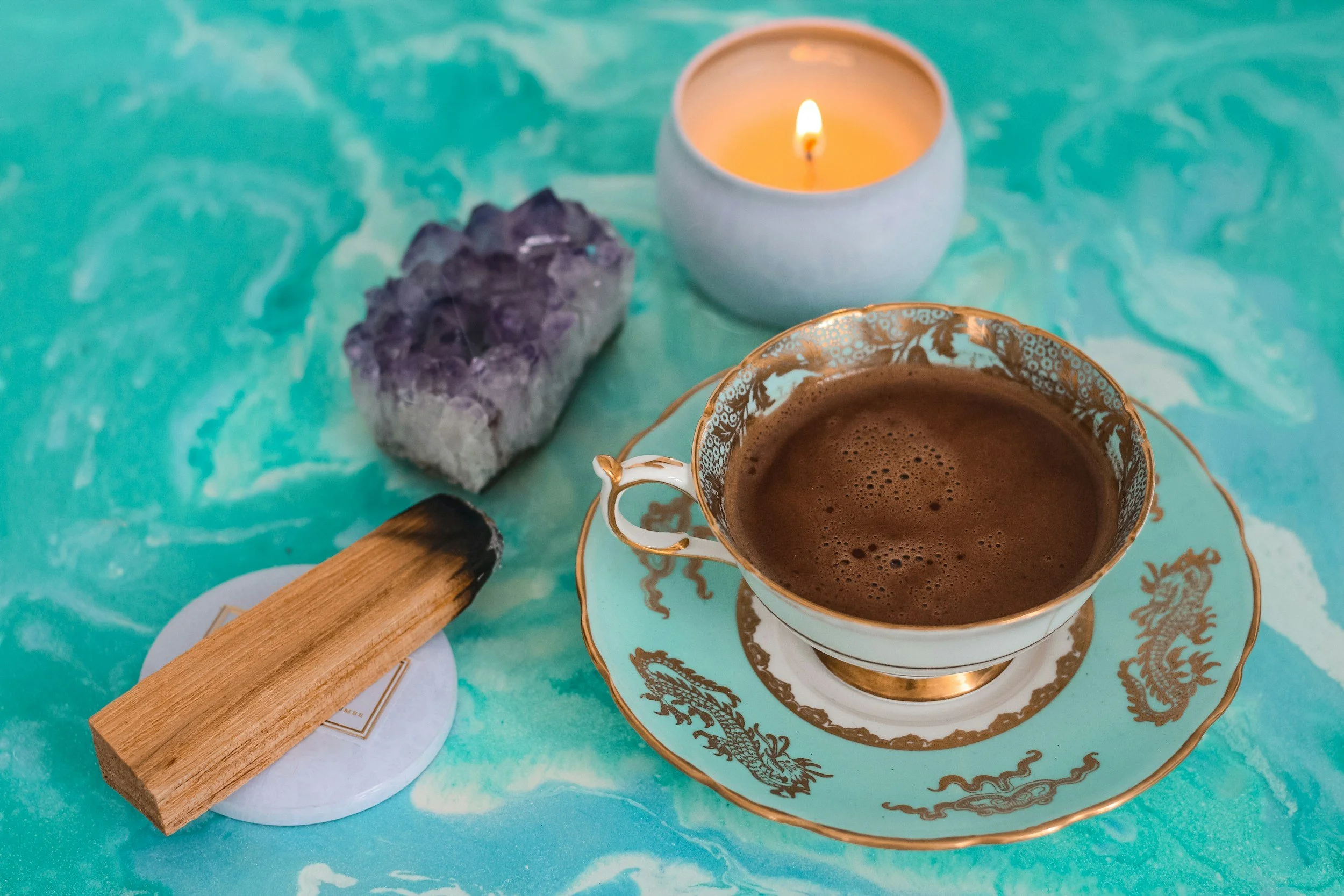
Rituals can also create space for reflection. Lighting a candle while journaling, taking a mindful walk, or sitting quietly with a cup of tea can give you an opportunity to ask:
What am I feeling today?
What do I need?
What am I ready to let go of?
What do I want to carry forward?
Creating space to notice your emotions is an important part of building greater self-awareness — and psychologists who study ritual behavior have found that this kind of structured reflection can genuinely support emotional processing and a sense of control, even during difficult periods (Psychology Today, Engaging in Rituals Can Strengthen Connection and Well-Being).
Creating Your Own Ritual
Your ritual doesn't need to look like anyone else's. Think about something that already makes you feel calm, connected, or present, and turn it into an intentional practice.
You might:
Light a candle while setting an intention for the day
Take a few deep breaths before getting into bed
Create a small, quiet space in your home that's just for you
Use calming scents as part of your evening routine
Journal during the New or Full Moon
Take a mindful walk without your phone
Spend a few minutes outside, noticing what you see, hear, and feel
The goal isn't to add another task to your to-do list. It's to create small moments of connection and meaning within the life you're already living. Perhaps that's where the real value of ritual comes in — not in doing something perfectly, but in giving yourself permission to slow down, be present, and reconnect with yourself.
Ritual as Part of Holistic Mental Wellness
At Wildflower Therapy Group, we think about mental wellness as something that involves the whole person — mind, body, and spirit. A simple ritual isn't a substitute for therapy or professional support when that's what you need, but it can be a meaningful piece of a larger picture: one small, repeatable way to stay connected to yourself between the bigger work you're doing elsewhere.
If you're navigating grief, anxiety, or a trauma history that feels like more than a personal practice can hold, that's exactly the kind of thing a trauma-informed therapist can help you work through directly.
Ready to go deeper than talk therapy? Book a free Intro Call