

Mental Health & Holistic Healing Blog

Fawning After Trauma: Why You People-Please to Feel Safe
Fawning is a trauma response that can look like people-pleasing, over-apologizing, and ignoring your own needs. Learn why it happens and how therapy can help.

Why Pregnancy Can Bring Up Old Trauma & How To Support Yourself
Pregnancy is often talked about as a joyful season, but pregnancy can also bring up emotions you did not expect. If pregnancy is bringing up old trauma, you are not doing anything wrong. You body is simply asking for care. Learn how to support yourself during this important stage of your life.

Gentle Ways to Regulate Your Nervous System During Pregnancy
Pregnancy feels beautiful, tender, confusing, and exhausting, sometimes all in the same day. How can you regulate your nervous system during this special time of your life? Here are some gentle, safe ways to regulate your nervous system during pregnancy.

Why You Can’t Relax Without Feeling Guilty
You finally sit down. Maybe for the first time all day. And yet, instead of feeling relief, you feel restless. For many women, rest can feel unfamiliar, uncomfortable, or even unsafe. Let’s talk about why this is so common and how somatic therapy and mindfulness can help your mind and body finally relax.

What Should I Do After My EMDR Session?
After an EMDR session, it’s common to walk away wondering what just happened. EMDR doesn’t just work in the moment. It continues to process in the hours and days that follow. Understanding how to support yourself during that time can make a meaningful difference in both how you feel and how effective the work becomes.

Is It Stress, Burnout, or Trauma? How to Tell the Difference
When everything feels heavy, it can be hard to name what’s actually going on. You might say you’re stressed. Or burned out. Or just tired. But sometimes, there’s something deeper underneath it all. Understanding the difference between stress, burnout, and trauma isn’t about labeling yourself. It’s about getting closer to the kind of support that will actually help you feel better.

What High-Functioning Anxiety Really Feels Like For Women
You’re the one people rely on. You get things done. You show up, push through, and keep going even when you’re exhausted. And yet, beneath all of that, there’s a constant hum. A sense of pressure you can’t quite turn off. Thoughts that keep looping. A body that rarely feels calm, fully at ease. This is often what high-functioning anxiety looks like.
Why You Can’t Think Your Way Out of Anxiety
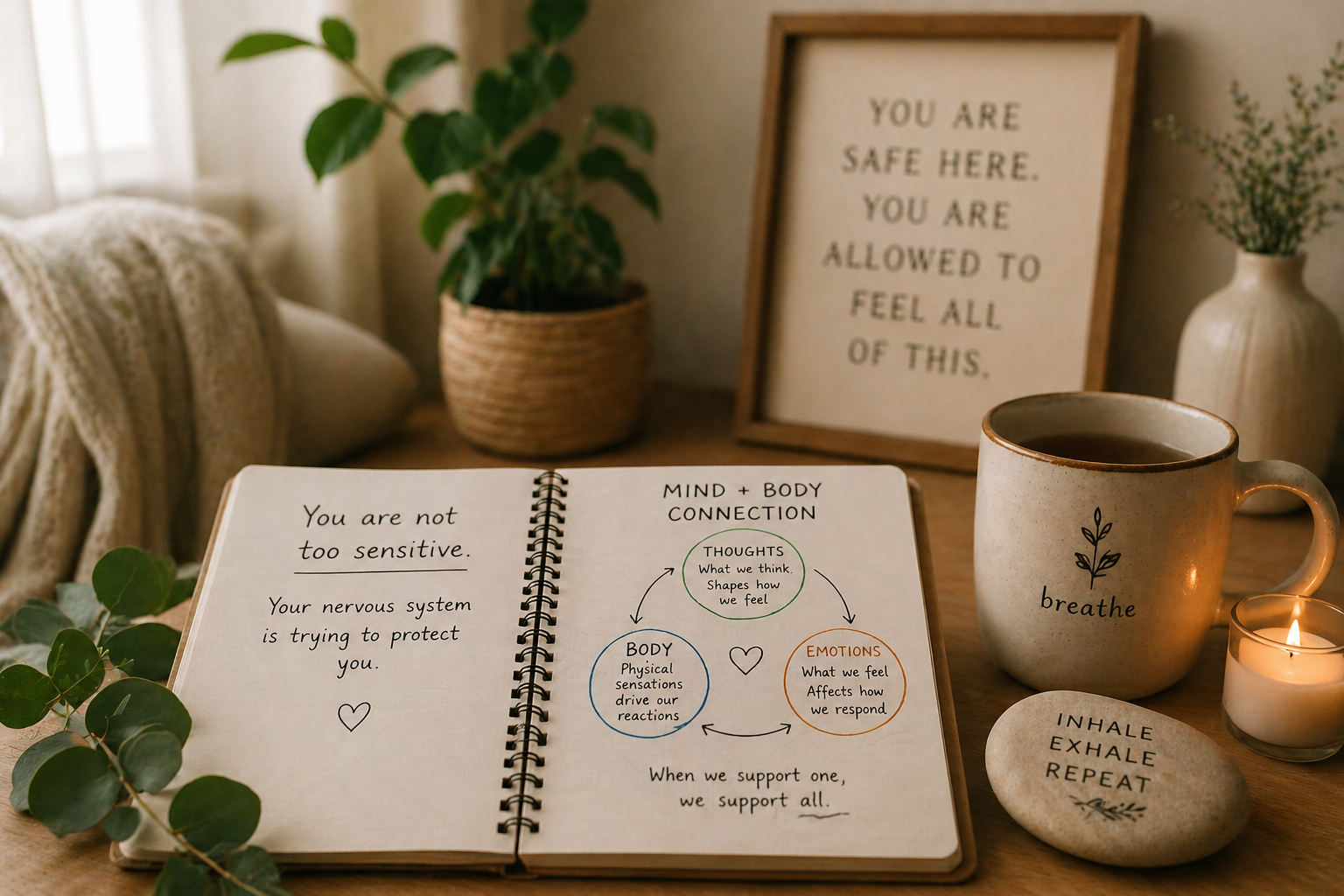
If you’ve ever tried to reason with your anxiety, you’re not alone. You might tell yourself everything is fine. You try to challenge your thoughts. You remind yourself there’s no real danger. And yet, your body still feels tense. Your chest still tightens. Your mind keeps racing. It can feel confusing and frustrating.

Burnout in Motherhood: When Strong Turns Into Exhausted
Motherhood burnout is a state of chronic physical, emotional, and mental exhaustion caused by prolonged stress and caregiving demands without adequate support or recovery.
Unlike a bad day or a hard week, burnout builds slowly. It develops when your nervous system stays in overdrive for months or years. If this resonates, you’re not failing at motherhood. But you may be experiencing burnout.

Healing After Pregnancy Loss: Grief That No One Talks About
Pregnancy loss is one of the most painful experiences a woman can go through. And yet, it’s often surrounded by silence. If you’re grieving a miscarriage, stillbirth, or another form of pregnancy loss, your grief is real. Let’s talk about the grief no one prepares you for and how healing is possible.

Is It Normal to Feel Anxious During Pregnancy?
Pregnancy is often described as a joyful time. And for many women, it is. But it can also bring waves of uncertainty, fear, vulnerability, and unexpected emotional intensity. If you’ve found yourself lying awake at night worrying about your baby’s health, your changing body, labor, or whether you’ll be a “good enough” mother, you’re not alone.

Brainspotting vs EMDR: Understanding the Difference Between Two Trauma Therapies
At Wildflower Therapy Group, we believe there is no one size fits all approach to healing from trauma. Understanding how Brainspotting and EMDR differ can help you choose the option that feels most supportive for your nervous system.

What Happens in a Brainspotting Session?
Beginning a new therapy approach can bring up curiosity and uncertainty. Many people want to know exactly what will happen in a Brainspotting session before they begin. Here’s what to expect from start to finish.

What Is Brainspotting Therapy?
Brainspotting therapy is a trauma-focused, body-based approach that helps people process and release experiences that feel stuck deep within the nervous system.

How Does EMDR Help Regulate the Nervous System?
Rather than asking you to relive your trauma or talk about it endlessly, EMDR supports your nervous system in doing what it naturally wants to do when it feels safe enough. Process, release, and integrate.

Daily Nervous System Regulation Practices To Put Yourself at Ease
Many people come to us believing they need to “fix” themselves. We gently reframe that belief. Your nervous system has been doing its best to keep you safe. Regulation practices are not about control. They are about relationship, curiosity, and compassion.

5 Signs Your Nervous System Is Dysregulated
Your nervous system’s job is to keep you safe. When it perceives threat, whether that threat is real, remembered, or ongoing, it shifts into protective mode. Over time, especially after trauma or prolonged stress, that protective state can become the default. This is what we mean when we talk about nervous system dysregulation.

Signs of High Functioning Anxiety in Women and When to Seek Support
If you’ve ever thought “I’m holding it together, but I’m struggling,” you’re not alone. High functioning anxiety is common among women who expect a lot of themselves and who feel pressure to perform, please, or stay strong even when they’re depleted. The good news is that you don’t have to live with that quiet tightness in your chest, the constant self pressure, or the feeling that your mind never truly rests.

Somatic Symptoms of Trauma: How the Body Holds Stress and How to Release It
Trauma doesn’t just live in your memories. It also lives in your body. Many women who have experienced trauma notice physical symptoms long before they ever use the word trauma to explain what they’re feeling.