
How long does EMDR take to work? It depends on your history, but general ranges can help you plan. Processing a single recent traumatic event may take approximately 3–6 sessions, and a single traumatic event often falls within the 6–12-session range the APA's EMDR overview describes. Complex or repeated trauma may take 12 sessions or more, and long-standing or developmental trauma can take considerably longer, with periods of active treatment and breaks between sessions.
EMDR stands for eye movement desensitization and reprocessing. It's a structured, evidence-based psychotherapy that helps your brain reprocess painful memories so they feel less charged. How long it takes depends on your history, not on how hard you try.
At Wildflower Therapy Group in Raleigh, NC, and through virtual sessions, you and your therapist set the pace together, and your therapist will explain how your information is protected, including any legal or ethical limits to confidentiality.
How Many EMDR Sessions Are Needed? Typical Ranges
Most people need anywhere from a handful of EMDR sessions to a dozen or more, depending on what they're working through. The number of sessions depends partly on how many memories you need to process, how long ago they happened, and how steady your support and coping skills feel right now.
Research supports EMDR as an effective treatment for PTSD, and the American Psychological Association's guideline suggests it among its trauma therapies. The APA's overview describes EMDR as typically delivered once or twice a week, for roughly 6–12 sessions in total, although some people benefit from fewer. The ranges below are general estimates, not clinical guidelines:
A single recent event: approximately 3–6 sessions, or about 3–6 weeks at a weekly pace
A single traumatic event: often 6–12 sessions, the range the APA's overview describes, or about 6–12 weeks at a weekly pace
Complex or repeated trauma: 12 sessions or more, often over several months
Developmental or long-standing trauma: may take considerably longer, with extended periods of preparation and reprocessing
A longer course of EMDR, 12 sessions or more, is recommended not only for complex trauma but also for breaking unhealthy patterns like toxic relationships or perfectionism, and for recurring struggles that affect your daily life, such as chronic pain, low self-esteem, or depression.
These are illustrative ranges, not promises or requirements. Timelines vary considerably, and yours may look different.
How Many Sessions of EMDR Are Needed for Complex Trauma?
EMDR for complex trauma often takes longer because treatment may involve multiple distressing experiences. A longer history may require additional preparation, more memories to process, and a slower pace. A longer timeline isn't failure. The process may involve more layers of preparation and reprocessing.
Stability comes first. You'll want to feel grounded and supported before any processing begins. If you have a layered history, you may want to read why an EMDR intensive might be your path.
Ready to Begin Your Healing Journey?
Wildflower Therapy Group offers trauma-informed, holistic therapy for women in Raleigh and online across North Carolina. Start with a free 15-minute consultation.
Get StartedWhat Changes Your EMDR Timeline?
Several things shape how many sessions you'll need:
How many memories you're working with, and how long ago they happened
How much stress you're carrying in daily life right now
The support you have outside therapy
The pace at which you feel comfortable processing distressing memories
How often you meet, whether that's weekly or more often
If you'd like to spread the work over fewer weeks, EMDR intensive therapy organizes treatment into longer, more concentrated sessions.
Can EMDR work in one session?
Sometimes a single memory shifts quickly. Most people need several sessions, though, because the first visits focus on history and preparation before processing begins. Your therapist will talk with you about what's realistic for your history.
What Happens During an EMDR Session? The 8 Phases of EMDR
EMDR treatment follows an eight-phase framework, but you usually won't go through all eight in one visit. The EMDR International Association describes the eight phases as a map that guides treatment. Early sessions focus on your history and on preparation. Processing starts later, once you feel steady.
History and planning: You share what you're comfortable sharing, and together you choose what to work on. This becomes your treatment plan.
Preparation: You learn calming and grounding skills you can use at any time.
Assessment: You identify a memory, along with the image, belief, and body sensations connected to it.
Desensitization: You process the memory while following side-to-side eye movements, taps, or tones. This is called bilateral stimulation.
Installation: You strengthen a more helpful, positive belief about yourself.
Body scan: You check your body for any leftover tension.
Closure: You settle and ground yourself before you leave.
Reevaluation: At your next visit, you and your therapist check on progress.
As treatment progresses, your therapist may revisit assessment, reprocessing, and other phases when working with different memories or treatment targets. That's part of why the number of sessions varies so much from person to person.
What Does an EMDR Session Look Like? (Will I Cry?)
EMDR sessions vary from person to person. Some feel manageable throughout, while others involve intense emotions. You remain awake and can communicate with your therapist or request a pause at any time. Your therapist guides the eye movements or taps while you notice whatever comes up.
Some people cry, and some feel very little. Either is okay. Feelings can come in waves and often settle. And you won't have to retell everything. The WHO's guidelines note that, unlike trauma-focused CBT, EMDR does not involve detailed descriptions of the event or homework.
Who might EMDR not be suitable for?
EMDR may not be the best first step if you need more stability first or would rather talk things through. That's a reasonable place to start. Talk therapy, Brainspotting (an approach that uses specific eye positions while exploring emotional and bodily responses, with research on its effectiveness still developing), or somatic work at Wildflower may fit better. If you're in crisis, call or text 988 or visit the 988 Suicide & Crisis Lifeline.
How Long Are EMDR Sessions?
EMDR sessions usually last about 50–90 minutes, and your EMDR therapist will recommend the length that fits your pace. The National Center for PTSD describes 60–90 minutes as typical. A longer session, such as 90 minutes, gives you time to open a memory, process it, and close it safely. Completing this process may be more difficult during a shorter appointment.
Most people meet weekly, and virtual sessions are an option if that fits your schedule better. Some add other support between visits, such as yoga therapy or somatic work. If you're curious about a more concentrated format, read how to know if an intensive fits you.
How Long Does EMDR Take Over a Full Course? Your EMDR Timeline
For a single traumatic event, a full course of EMDR can take a few weeks to a few months, and longer for complex or long-standing trauma. Progress may be gradual, although some people notice changes relatively quickly. Here's what it can look like:
Early on: Sleep or mood often steadies as you learn grounding skills.
Midway: Traumatic memories often start to feel less intense.
Later: Many people describe a more settled sense of who they are.
Treatment timelines for children and adolescents may differ from those for adults and are planned together with the family.
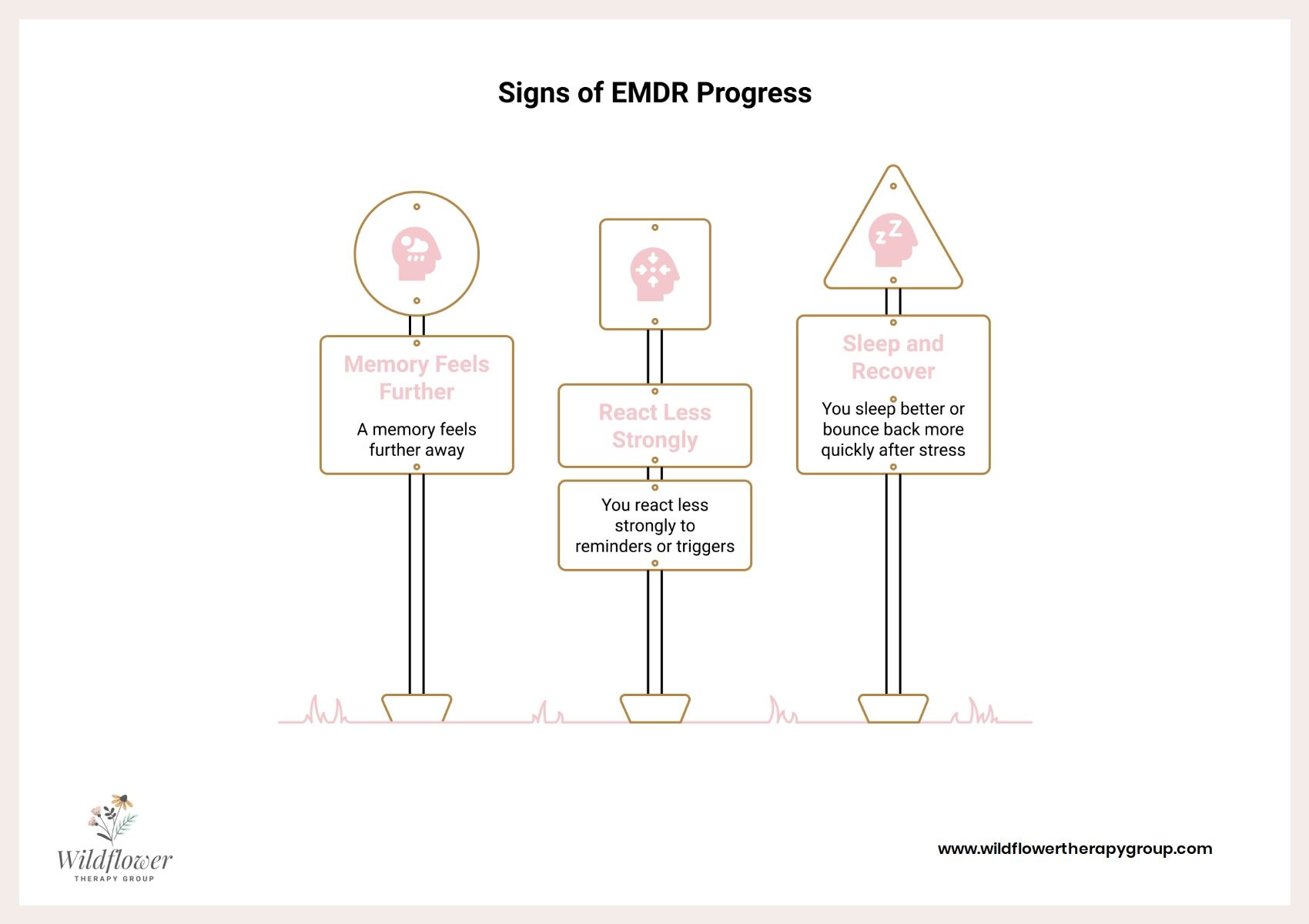
How Do You Know EMDR Is Working?
You'll usually see signs of progress in your everyday life:
A memory feels further away, as though it belongs to the past
You react less strongly to reminders or triggers
You sleep better or bounce back more quickly after stress
Ups and downs are normal. Some people feel tired or stirred up between sessions. That's common, and it's worth mentioning to your therapist. These tips for caring for yourself after an EMDR session can help.
Can Support Between Therapy Sessions Help?
Yes. Grounding skills and nervous system regulation techniques between sessions can help you feel steady while the work continues. Simple practices include a slow exhale, feeling your feet on the floor, or naming five things you can see. Learn more about how EMDR supports your nervous system.
How long do the results last?
Research suggests that EMDR can produce lasting improvements in PTSD symptoms, although individual outcomes vary. Some people come back for a few tune-up sessions during stressful seasons or when a new memory comes up. Either path is normal.
Book a Free EMDR Consultation in Raleigh to Map Out Your Timeline
How long does EMDR take to work for you? It depends on your history and your pace, not on a standard clock. A longer course means more sessions, so it helps to talk through pacing, how often you'll meet, and whether you'll use insurance or private pay before you begin. Wildflower Therapy Group offers EMDR therapy in Raleigh, NC, and virtually, along with EMDR intensives, Brainspotting, and somatic therapy.
A free consultation is a conversation about what you're hoping to work on and whether EMDR fits, with no commitment. You won't need to share details you're not ready to share, and your therapist can explain how your information is protected. Let's talk through your specific history and timeline. To schedule, use the contact form on our website or call (919) 524-3390.